Fluid technology involves transferring and controlling energy by means of pressurised fluid. Also commonly referred to as ‘fluid power’, the process involves compressing a gas or liquid and using it to drive a target system. It is a more efficient process of power transmission, because it uses just small volumes to achieve high power transfer.
Fluid systems usually perform work by means of a compressed fluid (under the desired pressure) bearing down on a piston, which in turn converts to mechanical energy.
Fluid power systems are mainly classified into two types according to the type of fluid used: Hydraulics and Pneumatics. Hydraulics systems make use of liquids or oils for energy transfer, while Pneumatic systems utilise gas.
Modular Cleanroom Benefits
- Modular Construction
- Quick Assembly Time
- Versatility
- Reconfiguration
- Airflow Control
- Inexpensive Modifications
Hydraulics
Hydraulics generally involves technologies that make use of the mechanical properties of liquids. They are based on fluid mechanics and refer to the generation, transfer and control of energy using compressed fluids. Most industrial hydraulic systems make use of oil for its added lubricating function. Systems that utilise water usually cost less and are fire resistant.
Hydraulics are widely used across various industries to lift heavy loads, carry loads around, as well as drive trucks. Its most common use is in off-highway equipment for works such as construction, agriculture and mining. Other applications of hydraulics include braking systems, conveyor systems, metal-forming machinery, and others.
Cleanroom Design, Build & Validation
- Budgeting and planning
- Engineering, design & layout
- Airflow and filtration design
- Construction and Installation
- Full Certification of our product
- Industry-specific equipment installation
- Validation
The applications of Pneumatic systems include the propelling of aircraft by expelling compressed fumes in the opposite direction; in Airbrake pads to hold on to tyres; and in cleanrooms to maintain a safe environment by introducing pressurised air to drive out unclean air through the appropriate vents. It’s also used in motor systems, pipe organs, dental drills and HVAC control systems, amongst others. Pneumatic devices get their power from the energy of the compressed air.

They are usually made of a compressor to compress the air or gas – an actuator which transfers the energy to the desired endpoint, as well as a system of valves and pipes for controlling and channelling the air.
Modular Cleanroom Services
- Design & Build
- Free Site Survey
- Free Design Service
- Cleanroom Planning
- Construction and Installation
- CNC Engineered
- Training & Support
- Discounted Service Contracts
- Remedial Works
- Panel Repairs
- Alternations
- BMS Management
- Cleanroom Certification
- Differential Pressure Qualification
- Servicing Testing Validation
- Smoke Testing
- DOP Testing
Cleanroom Features
- GMP
- ISO 4-9
- ISO 14644
- Low Power Consumption
- Environmentally Friendly
- HEPA Filters
- Air Filtration
- Fan Filter Units
- Cleanroom Ceiling System
- Temperature Control
- Access Control
- Inter Lock Door Systems
- Air Showers
- Unidirectional Airflow
- Desiccator Cabinets
- Horizontal Flow Wall Modules
- Horizontal Laminar Flow Clean Benches
- Laminar flow cabinets
- Laminar Flow Canopy
Fluid Technology and Cleanrooms
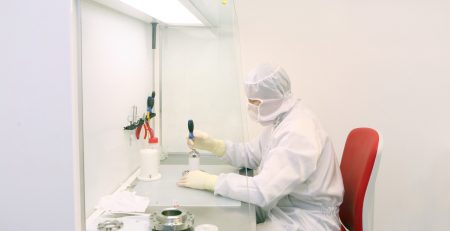
Fluid technology is used in cleanrooms to drive out polluted air and replace it with clean air. To do this, the incoming air is usually compressed with enough pressure to drive the polluted air towards the outlet vent. Cleanrooms with horizontal laminar flow benches and powerful fan filter units are necessary to keep the fluid (air) flowing in one direction (unidirectional airflow). This ensures the cleanroom always stays clean.
To keep the incoming fluid clean and pure, cleanrooms are fitted with filters to remove contaminants. Filtration is usually in three phases; a pre-filter is used to remove dust particles from the fluid (compressed air), but not effective enough to remove water and oil vapours. Cleanrooms fitted with HEPA and ULPA filters contain a second phase, in which these filters extract the moisture, water vapour and oil vapour from the compressed air. The third phase is optional and involves the use of activated carbon filters to remove odour vapour from the air.


Total Clean Air Cleanrooms and Filters
Total Clean Air modular cleanrooms are constructed to precision to enable better filtration of air. They come equipped with HEPA and ULPA filters, which have 99.97% and 99.9997% efficiency respectively to keep contaminants out of the room.
Other features of our cleanrooms include laminar flow cabinets, horizontal flow benches, fan filters, and unidirectional airflow. These make our cleanrooms powerful enough to effectively drive unclean air out of the cleanroom and filter the cleanroom within minutes of pollution.